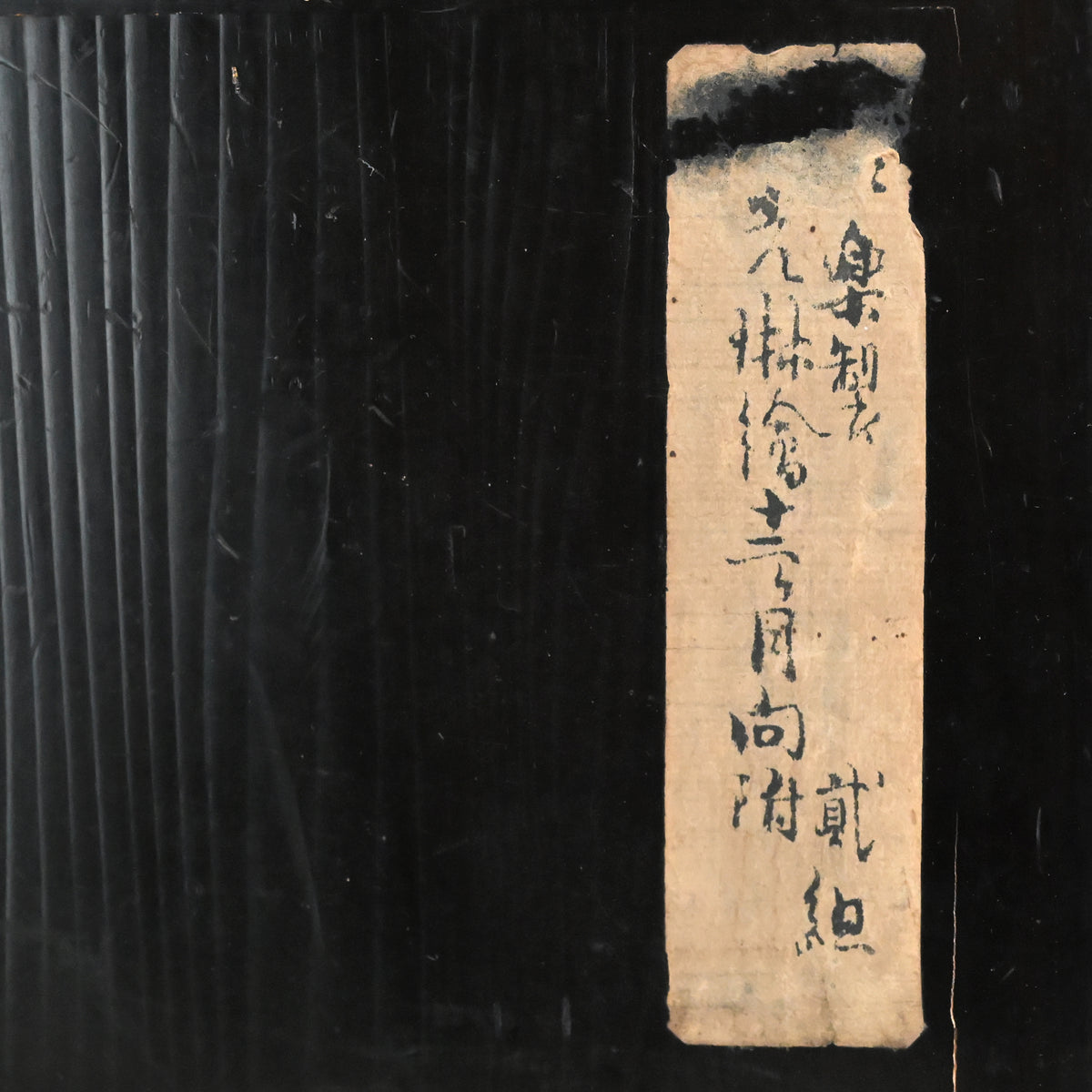
A boxed set of 12 ceramic plates, each uniquely decorated with a seasonal motif from one of the Eiraku kilns enclosed in a black lacquered tiered wooden box. Judging by the Meiji style, these are likely from the anomalous 12th -14th generations. Each dish is 14 x 17 x 3.5 cm (5-1/2 x 6-1/2 x 1-1/2 inches) and all are in an overall excellent state of preservation. They are each wrapped in yellow cloth and enclosed in a black lacquered wooden box lined with tiers for each dish in raw paulownia wood, showing the value placed upon the set. <br> The Eiraku (Nishimura) family is one of Japan’s most important and historically significant lines of pottery artists in Kyoto, tracing back to the 16th century. The skill of Eiraku potters earned the honorific title of Senke-Jissoku, reserved for 10 families of artisans who produce tea ceremony utensils for the san-Senke, or Japanese tea schools. Records and information on early generations of the Nishimura family were destroyed in the Tenmei fire (1788). <br> Nishimura Ryozen (1771-1841) was able to restore his household in Ichijobashi with assistance from the Sen family. Because the generational records, as well as the Sozen Seal that served as the symbol for each generation were lost in the Great Tenmei Fire, details and records pertaining to Ryozen's predecessors are less clear. In the generations following Ryozen, the seals used were original, and became increasingly varied. The name Eiraku began being used by the 11th generation Hozen. During the later half of the 19th century things become a little confusing as there were more than one Eiraku at the same time, Wazen, Sosaburo and Tokuzen working in different parts of Japan (Eiraku 12, 13A, and 14A respectively). Eiraku Zengoro XIII (Sosaburo) was born into a family of lacquer artisans, but was sent to the studio of Eiraku Hozen in 1847. He led a tumultuous life, running the kiln for Hozen, then becoming Eiraku XIII, then changing his name to Nishimura Sosaburo. And in his later years, moved to Osaka under the Mitsui family kiln which had been under the guidance of the Eiraku family. He died in 1876 but was succeeded by Tosuke (who maintained as the 2nd 13th generation. Tosuke died in 1893. Eiraku Zengoro XIV (Tokuzen) was born the first son of Eiraku Wazen, the 12th generation head of the family in 1853. Best known for Aka-e and Gosu, with a strong hand, he died in 1909. To add to the confusion, without an heir, the wife of Tokuzen takes over continuing as the 14th generation (so 14B).