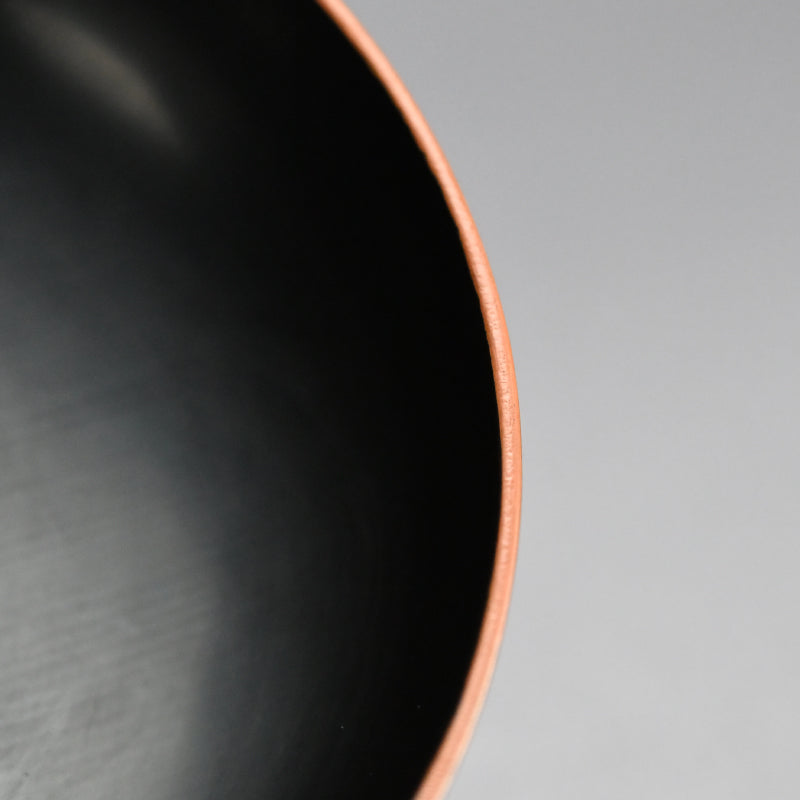
A set of five carved wooden covered bowls lacquered to look like bamboo lined in black and signed on the base Chikushin. These are very unusual, the pattern made to look like two colors of bamboo combined to form a bowl, complete with nodules, however the work is performed entirely in turned wood and lacquer. They are in excellent condition enclosed in a period wooden box. Each is 12.5 cm (5 inches) diameter, 6 cm (2-1/2 inches) tall and in excellent condition. By size these could be sued to either serve rice, soup or other parts of the meal.
The basic setting in Japanese food is Ichiju-Sansai or one soup, three dishes. So instead of mixing everything on one plate, each part of the meal is given its own dish. Much Japanese food is still served fresh, and so the four seasons are an indispensable factor for the table. Kaiseki is a traditional Japanese multi-course dining experience that emphasizes seasonality, aesthetics, and harmony. The presentation of Kaiseki dishes is as much an art form as the preparation itself, guided by key principles. Great care is taken in selecting plates, bowls, and utensils that enhance the presentation and tie into the season. Materials like lacquerware, ceramics, and bamboo may be used, often featuring seasonal designs. Even the smallest details, such as the angle of a garnish or the placement of a sauce, are considered. Kaiseki emphasizes diversity in textures, flavors, and cooking methods (e.g., raw, grilled, steamed, fried, and simmered dishes). Balance in color, texture, and shape is critical. Each element of the dish complements the others, creating a sense of unity. This harmony extends to the choice of dishware, which should suit the food and the season. By combining these principles, Kaiseki creates a dining experience that is both a feast for the palate and the eyes, reflecting Japanese philosophy and aesthetics.