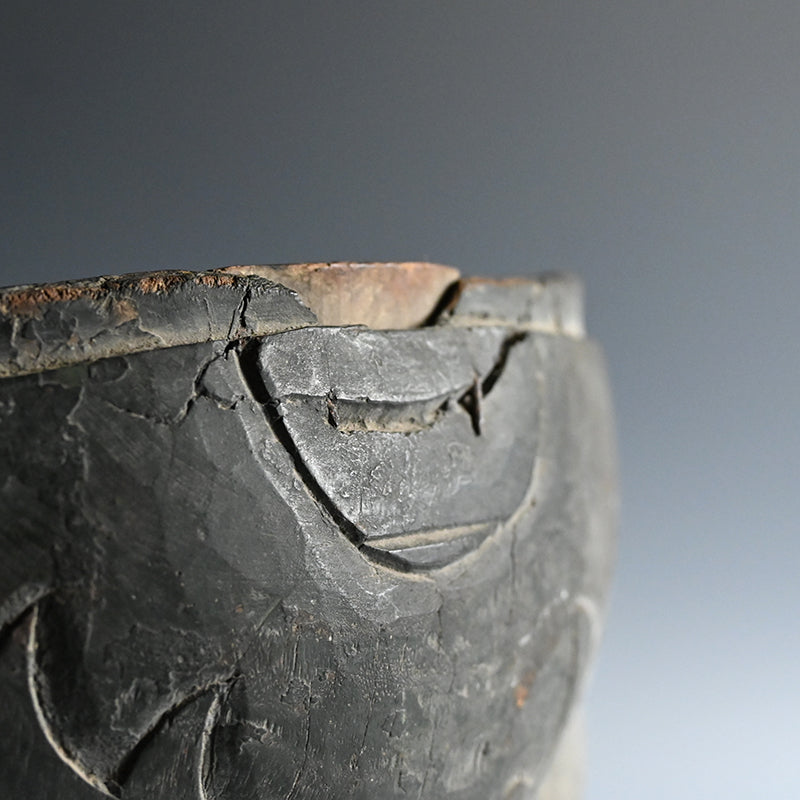
In the Tohoku area, including Miyagi Prefecture and Iwate Prefecture, Kamadogami (Kamado no Kami) is enshrined in a mask made of wood or clay called a Kamaotoko (cauldron male) or Kamajin (cauldron person) and hung on a pillar near the kamado hearth. It is 29 x 25 x 11 cm and is in excellent condition.
Kamado no Kami translates to "God of the Hearth" or "Kitchen God." In traditional Japanese beliefs, the Kamado no Kami is a deity or spirit associated with the hearth, kitchen, and cooking. The hearth was a central and essential feature of traditional Japanese homes, serving as a source of warmth and a place for preparing meals. The Kamado no Kami was believed to reside within the kitchen's hearth and was revered as a household protector. The deity was thought to bring good fortune, prosperity, and health to the family. Properly appeasing and showing respect to the Kamado no Kami was seen as essential to ensure the well-being and happiness of the household.
While the worship of the Kamado no Kami was a widespread practice in various regions of Japan, it's important to note that specific beliefs and customs could vary from one region to another. The Tohoku region, in the northeast of Japan's main island, is known for its rich folklore and unique cultural practices and reverence for the Kamado no Kami was especially strong. In the traditional Japanese context, the hearth and its deity held significant cultural importance, but with modernization and changes in household structures, many of these beliefs and practices have evolved or declined. Nevertheless, some elements of traditional culture and beliefs continue to be preserved and celebrated in various parts of Japan, especially in rural areas and during traditional festivals.