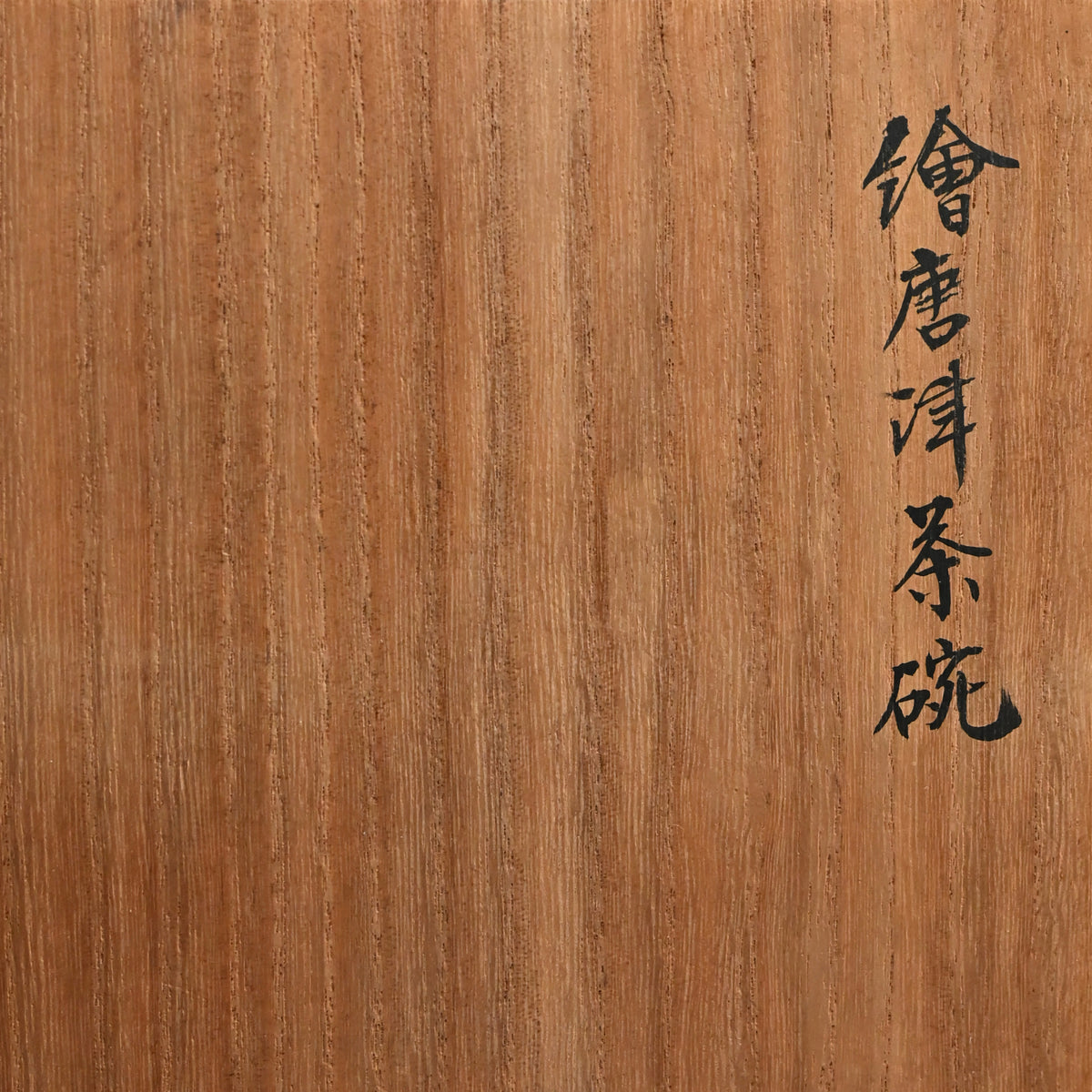
An evocative e-Karatsu tea bowl with softly irregular form decorated with freely brushed designs in iron pigment beneath a translucent ash-colored glaze, broken and repaired with two shards from other bowls using the Kintsugi lacquer repair technique. The bowl is wrapped by a silk-lined cloth pouch and enclosed in a finely made kiri-wood storage box titled E-Karatsu Chawan. The warm gray-beige surface is enlivened by bold, abbreviated brushwork, while the gently undulating rim and broad flared walls give the bowl a relaxed and inviting character. Particularly striking are the sections of contrasting ceramic incorporated into the vessel through yobitsugi, a traditional technique of joining fragments from different vessels. The broad lacquer joints are embellished with silver deco ration in a repeating seigaiha (overlapping wave) pattern, transforming the repaired areas into an integral part of the composition. Measuring 15 x 12.5 x 7.5 cm (approximately 6 x 5 x 3 inches), and is in excellent condition.
One detail I find particularly interesting is the gold seigaiha pattern along the repaired joins. The repeated semicircular waves introduce a deliberate decorative rhythm quite different from the spontaneous iron brushwork of the original pottery. This contrast between the original vessel and the later intervention is central to the bowl's appeal.
Karatsu ware, produced in northern Kyushu, occupies a distinguished place in the history of Japanese tea ceramics. Its origins are closely associated with Korean ceramic traditions introduced to the region during the late sixteenth century, and its unpretentious forms and lively iron-painted decoration became particularly admired among practitioners of the tea ceremony. Yobitsugi, literally “calling together and joining,” represents a distinctive approach to ceramic restoration in which fragments from different vessels are brought together to create a new and often unexpected harmony. Rather than concealing the object's history, the repair becomes an expressive element in its own right, celebrating the passage of time and the aesthetic possibilities of imperfection.