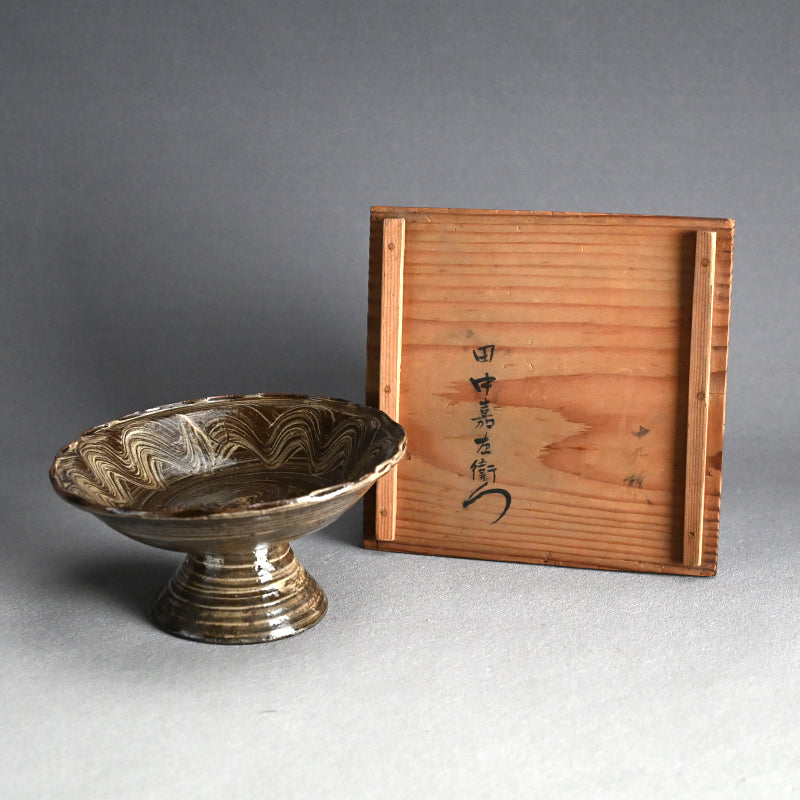
A superb example of the Utsutsugawa tradition dating from the original first production in the late 17th to 18th century enclosed in an age darkened wooden box signed inside Tanaka Kazaemon. The dark iron clay has been raised on a foot upon which is affixed a deep bowl rising to a rhythmically undulating rim. The entirety is decorated with free-hand brush strokes of white slip. It is 20 cm (8 inches) diameter, 10.5 cm (4 inches) tall and in overall fine condition, with some minor chips to the rim to be expected of a pottery bowl of this age.
Utsutsugawa-yaki (also Utsutsukawa) is a rare type of Japanese pottery originating in Nagasaki in the late 17th century. It is said it began when Tanaka Gyobusaemon (Soetsu) opened a kiln around 1690 under the patronage of the Isahaya Lords of the Domain. It is characterized by brown orange clay with a heavy iron content and was most often decorated with Brush strokes in white slip. Praised as the "Ninsei of the West" for its elegant, Kyoto-style brushwork combined with powerful rustic textures, it is known as a "phantom pottery" because it vanished after only about 60 years due to financial constraints. and it disappeared until an attempted revival in the Meiji period, however, that too failed to last due to pressures of modernization. In modern times the art wa s revived by Yokoishi Gagyu, and has been named an important cultural property of Nagasaki Prefecture.