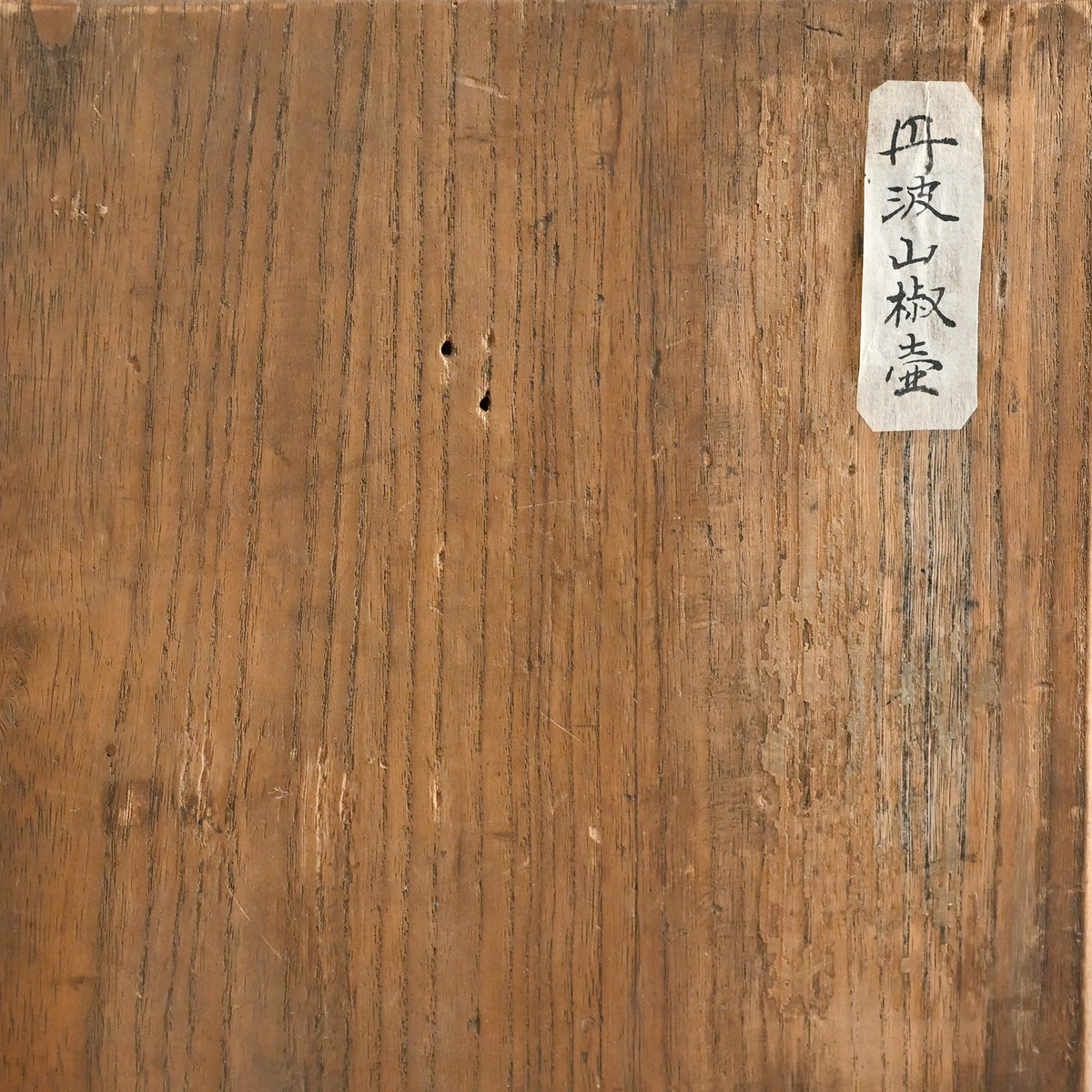
An unusual four-lugged sanshō-tsubo (Japanese pepper storage jar) from the Edo-period kilns of Tamba, one of Japan's celebrated Six Ancient Kilns (Rokkoyō). The tall, cylindrical body rises from a narrower, unglazed foot to a broad shoulder fitted with four pierced lugs surrounding a short, rolled-rim mouth. Its surface is covered in a glossy olive-brown ash glaze (haiyū), gathering richly around the shoulder and flowing irregularly down the sides, contrasting beautifully with the warm reddish-brown clay exposed near the base. A pronounced depression in one side lends the otherwise formal silhouette an appealing irregularity, while the shoulder bears traces of prolonged use. Measuring 21 cm (8-1/4 inches) in diameter and 29 cm (11-1/2 inches) tall, the jar is in excellent condition and is accompanied by a substantial, age-darkened kiri-wood storage box identifying it as a sanshō-tsubo.
Tamba's mountainous region was celebrated not only for its pottery but also for its agricultural products, particularly Asakura sanshō, a fragrant variety of Japanese pepper associated with present-day Yabu in Hyōgo Prefecture. Writing in 1933, the celebrated artist and gastronome Kitaōji Rosanjin recalled the historical prestige of Asakura sanshō, describing its presentation to daimyō and other distinguished recipients as a prized regional gift, and referring to the traditional ceramic jars in which it was kept. Such accounts offer a fascinating glimpse into the relationship between local pottery, regional produce, and the customs of gift-giving in premodern Japan.
Although traditionally identified as a sanshō-tsubo, the vessel's four pierced lugs are also characteristic of jars used for storing tea leaves, suggesting the versatility of such forms within the material culture of the period. Whether intended for fragrant pepper or precious tea, this handsome jar embodies the enduring appeal of Tamba pottery, where practical necessity, robust craftsmanship, and the unpredictable beauty of the kiln converge in an object of quiet sculptural presence.