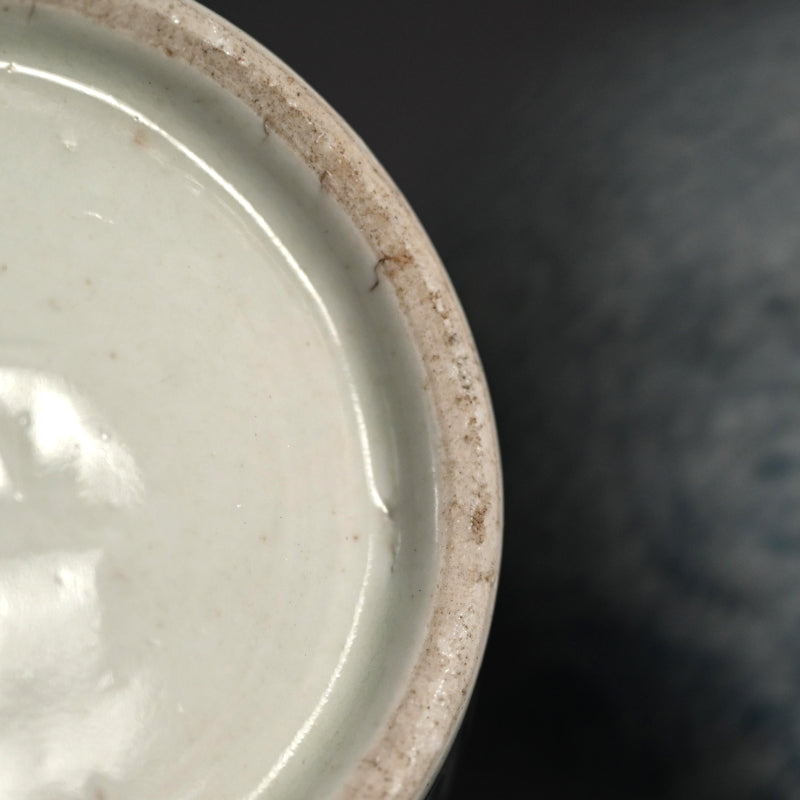
A matching pair of Tako-Karakusa (Octopus Vine) vases with elongated necks dating from the Mid to Later Edo period (18th to early 19th c) hailing from the Arita Kilns of southern Japan. They are 10 cm (4 inches) diameter, 26 cm (10-1/2 inches) tall and in perfect condition.
Imari porcelain, also known as Arita ware, has its origins in the early 17th century and is one of Japan's most renowned ceramic traditions. Porcelain production in the Imari region began around 1616 when Korean potters, brought to Japan after Toyotomi Hideyoshi's invasions of Korea (1592–1598), discovered high-quality kaolin clay in the Ara area of Kyushu. This marked the birth of Japan's first porcelain industry. During the early Edo period, Arita became a thriving center for porcelain production. The nearby port of Imari served as the primary shipping hub, leading to the porcelain being known internationally as "Imari ware." Early Imari wares were heavily influenced by Chinese designs, especially those from the Ming dynasty. Techniques evolved to include underglaze blue decoration (similar to Chinese blue-and-white porcelain) and, later, polychrome overglaze enamels, which became hallmarks of Imari porcelain. Imari porcelain gained widespread popularity in Europe during the 17th and 18th centuries, facilitated by the Dutch East India Company. European aristocracy prized its vibrant designs, which often featured intricate floral patterns, birds, and mythical creatures.