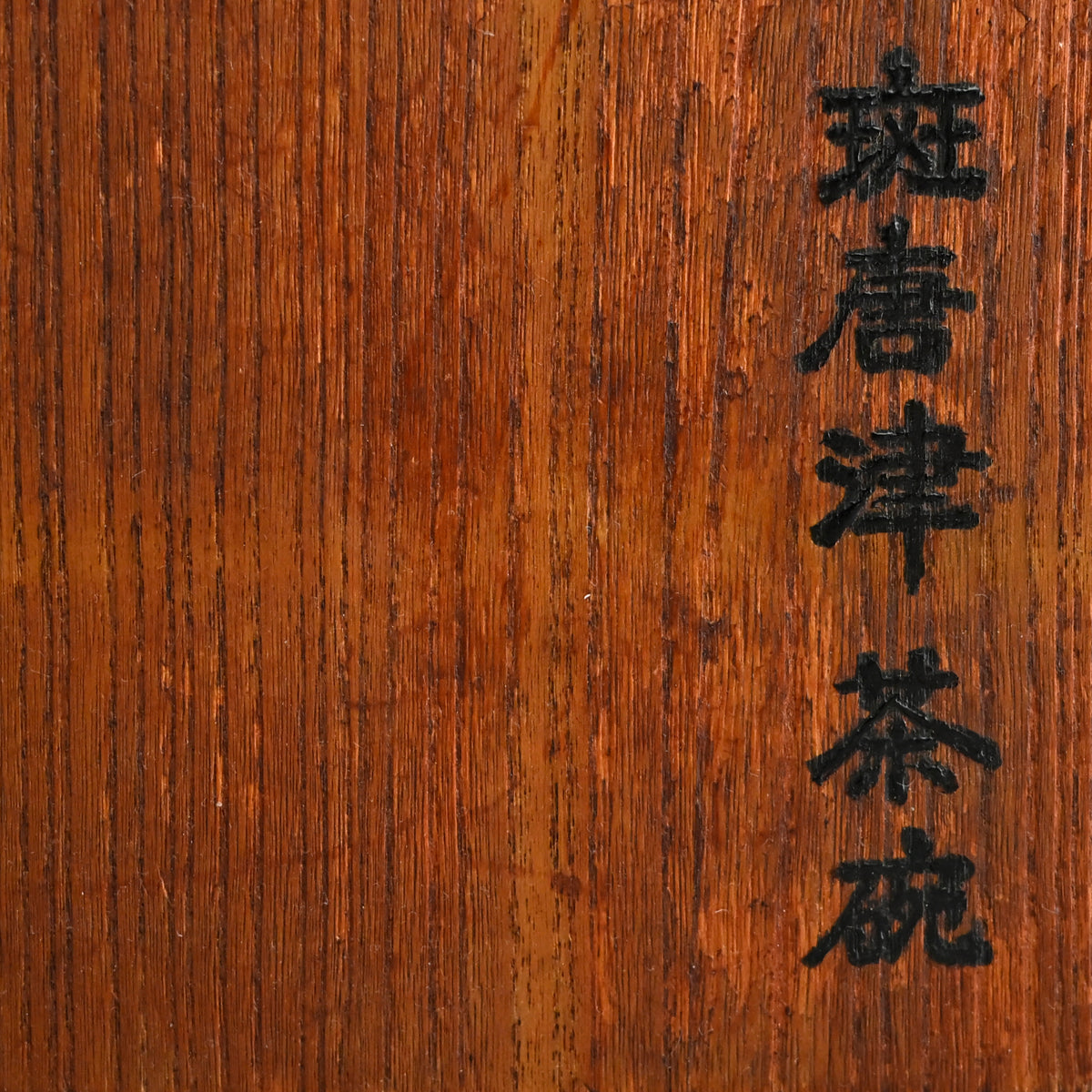
A 17th-18th century Karatsu Tea Bowl with various gold repairs contained in a silk lined cloth pouch with cotton buff in a period wooden collectors box titled Madara Karatsu Chawan. It is 12 x 13 x 7.5 cm (roughly 5 inches diameter, 3 inches tall). There are old gold lacquer repairs to the misshapen rim and the foot.
Karatsu pottery (Karatsu-yaki) is a celebrated Japanese ceramic tradition that originated in the late 16th century in Karatsu, Saga Prefecture, on the island of Kyushu, heavily influenced by Korean pottery techniques brought over by artisans during the Azuchi-Momoyama period (1573–1603). Karatsu pottery is known for its understated, rustic aesthetic, often characterized by natural glazes, earthy tones, and minimal decoration. Its designs align with the Japanese concept of wabi-sabi, emphasizing simplicity, imperfection, and the beauty of natural forms. Popular styles include E-garatsu (painted Karatsu), Madara-garatsu (spotted Karatsu), and Chōsen-garatsu (Korean-style Karatsu). Initially, Karatsu ware was produced to serve the practical needs of daily life, including tableware, and storage jars. However, with the rise of the Japanese tea ceremony, it became highly sought after by tea masters for its organic beauty and suitability for the ritual.