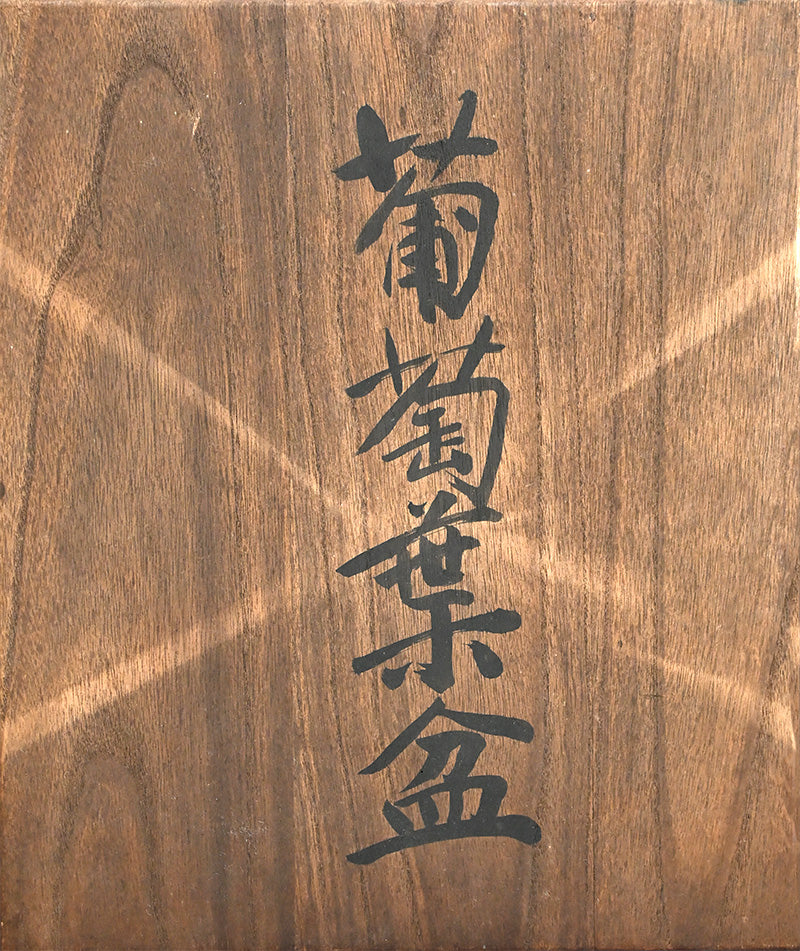
A fabulous tray carved into the shape of a lotus leaf from wood burl enclosed in a period kiri-wood storage box titled Budo Habon (Burl wood Leaf Tray) dating from the late 19th to early 20th centuries. It is 47 x 38.5 x 3 cm (19 x 15-1/2 x 1 inches) and is in excellent condition.
The fundamental symbolism comes from the lotus's remarkable habit of emerging pristine from muddy water. In Buddhist thought, the mud represents the defiled world of attachment and desire, while the immaculate flower represents awakening. Hence the lotus throne beneath Buddhas and bodhisattvas. But Chinese literati culture gave this idea a more secular, ethical interpretation that became enormously important to Japanese bunjin. The cultivated person of moral integrity—the ideal to which the Confucian scholar aspired. The lotus therefore became an emblem of the scholar who lives within a corrupt or vulgar world without allowing himself to be corrupted by it. A lotus flower naturally emphasizes purity and enlightenment. The leaf, particularly the great spreading leaf, carries additional associations. Its broad surface naturally forms a dish, tray, cup or basin. Chinese and Japanese craftsmen therefore delighted in turning the lotus leaf into functional objects: trays, dishes, water vessels, brush washers, incense utensils and sencha implements. That creates a very bunjin sort of ambiguity: is it a natural object that resembles a vessel, or a vessel imitating nature? A carved wooden lotus-leaf tray, for instance, transforms an object from the scholar's imagined natural landscape into something upon which tea utensils can actually be placed. The scholar figuratively brings the pond into his study. Sencha culture developed strongly among Japanese intellectuals and artists partly as an alternative to the increasingly codified world of chanoyu. Its heroes were Chinese scholars, poets and recluses, and its gatherings cultivated an atmosphere of elegant informality (fūryū). And decay is almost as important as perfection. For Japanese literati, an immaculate lotus leaf was not necessarily more desirable than a torn, curled or withering one. An aging lotus leaf—with insect holes, ragged edges, curling stem or patches of decay—introduces another layer of meaning: impermanence and the passage of the seasons.