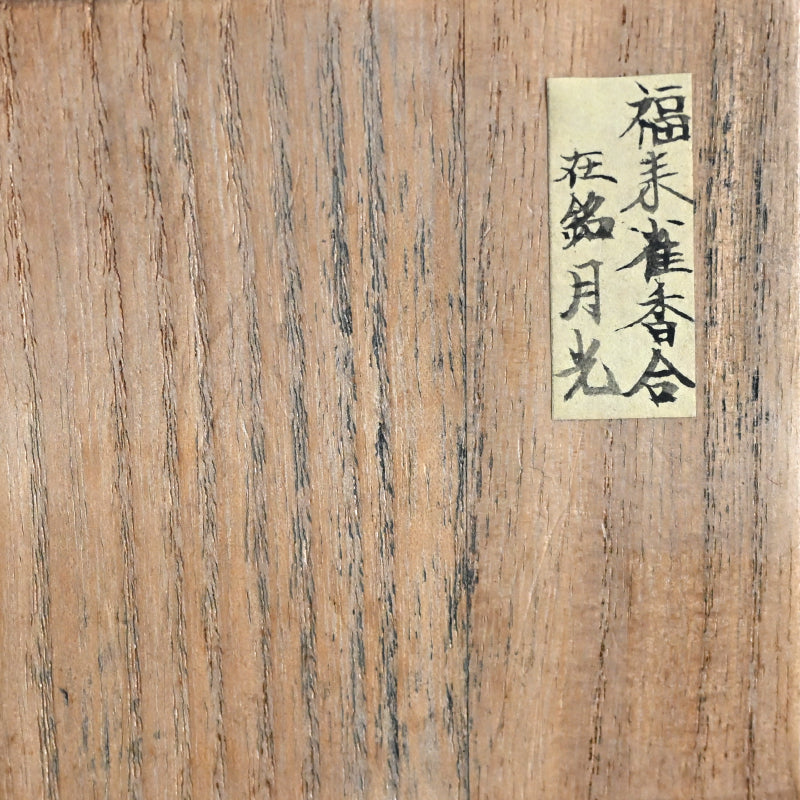
A “kawaii” image of a luck carrying sparrow puffed up and singing as if happily nesting eggs wrapped in a silk lined brocade pouch and enclosed in a custom made wooden box. It is 6.2 x 4.5 x 4.5 cm (2-1/2 x 1-3/4 x 1-3/4 inches) and in excellent condition.
A kogo is, at its simplest, a small lidded container for incense used in the Japanese tea ceremony. Yet, like so many tea utensils, its practical function explains only a small part of its cultural importance. The kogo became one of the most concentrated expressions of seasonality, allusion, wit, and connoisseurship within chanoyu. During a tea gathering, incense is placed in the hearth (ro) or portable brazier (furo) together with the charcoal. The fragrance subtly perfumes the tea room and, traditionally, helps soften the smell of burning charcoal. The kogo holds the incense before it is placed in the fire during the charcoal-laying procedure. Because it is small and does not have to perform the demanding functional role of a tea bowl or water jar, the kogo gave potters enormous freedom. It could become almost anything: a clam shell, rabbit, crane, tortoise, cicada, chrysanthemum, plum blossom, fan, drum, melon, persimmon, treasure sack, mask, architectural form—or an object referring to a poem, famous place, festival or historical episode. A particular shape or painted motif might refer to a classical poem, a passage from literature, a famous place (meisho), a festival or an episode understood by knowledgeable guests. Thus, the kogo can function almost like a visual haiku. A kogo rarely needs to dominate the tea room. Its significance lies in how it participates in the Toriawase: the considered combination of utensils. The scroll, flower arrangement, flower container, kettle, water jar, tea caddy, tea bowl, sweets container and kogo can collectively create a web of seasonal and poetic associations. The kogo can therefore supply a note that is absent elsewhere. Again, contrast is part of the aesthetic. The Chawan is where tea is experienced; the kogo is often where the host is allowed to whisper a small joke, seasonal thought, or poetic allusion to the guest. That latter quality is why I find kōgō so interesting. Their physical scale is almost inversely proportional to the cultural information they can contain.