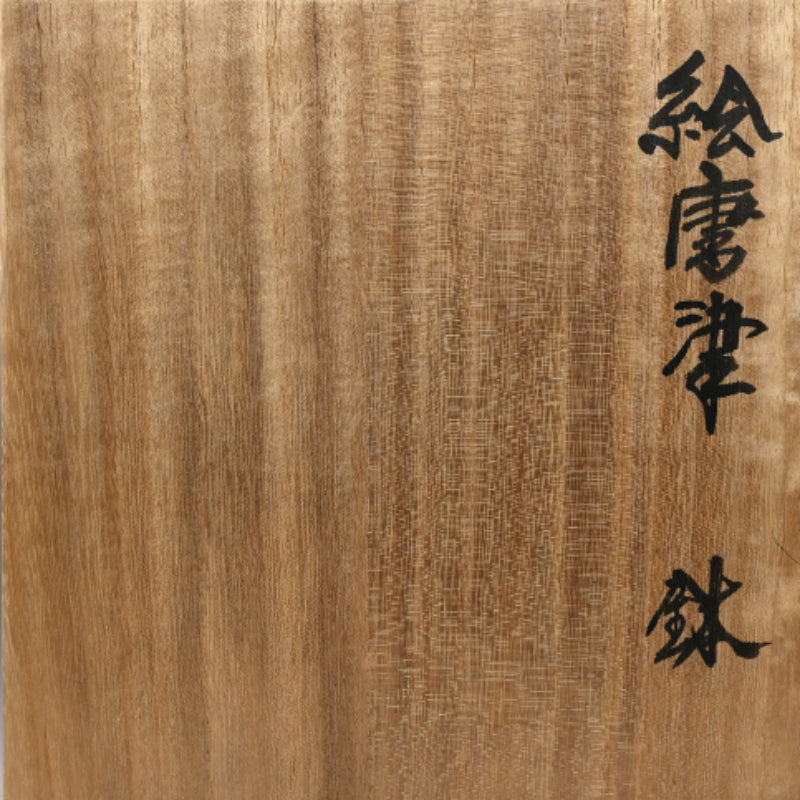
An E-karatsu Yobitsugi bowl made of various shards attached with wide bands of gold to a discarded base: the pieces dating from the Momoyama to early Edo periods. It is 22 x 20 x 6 cm 8-1/2 x 8 x 2-1/4 inches) and comes enclosed in a modern kiri-wood collectors box titled E-Karatsu Hachi.
This method of using pieces from multiple works with lacquer repair is called Yobitsugi. Yobitsugi is a form of kintsugi that entails combining pieces of different objects together in order to create a completely new vessel. The newly created vessel is typically made of 60% – 70% of the first vessel and 30%-40% of the second vessel. Kintsugi embodies the spirit of wabi-sabi, a Japanese aesthetic worldview centered around imperfection, transience, and the beauty of the natural cycle of growth and decay. Embracing the flawed and broken aspects of an object through kintsugi is a way to appreciate the passage of time and the history of the object, recognizing that it gains value and character through its journey. Kintsugi aligns with traditional Japanese values of frugality and resourcefulness. Instead of discarding broken items, kintsugi repairs them, extending their lifespan and reducing waste. This approach reflects a profound respect for resources and a desire to cherish and honor the objects used in daily life. This is also a way to avoid offending the spirit of the object, as all items are embodied with a soul of some sort. The act of repairing broken pottery with gold-laced lacquer carries a symbolic message of resilience and overcoming adversity. The restored object becomes a metaphor for the human experience, highlighting that even after suffering damage or hardship, one can find beauty and strength through healing and renewal. In the context of the Japanese tea ceremony kintsugi plays a vital role in enhancing the overall aesthetic experience, especially during the tenth month. The practice of kintsugi encourages contemplation and introspection during the tea ceremony. Guests may be reminded of the impermanence of all things and the beauty that can arise from embracing life's scars and vulnerabilities. Overall, kintsugi holds a deep cultural and philosophical significance in Japanese culture, symbolizing beauty in imperfection, respect for resources, and the resilience of both objects and individuals. In the context of the tea ceremony, it enriches the aesthetics and fosters a sense of mindfulness and appreciation for the present moment.