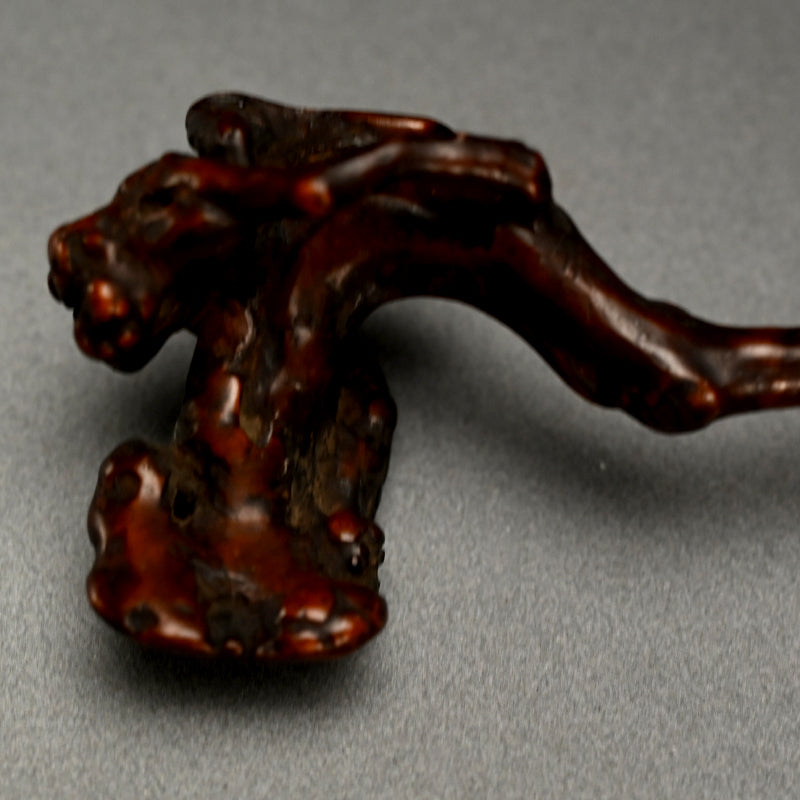
Antique Japanese Scholar Art Root-Wood Nyoi
Item Code: SA007
受取状況を読み込めませんでした
A root wood nyoi intimating Reishi mushrooms taken from a lovingly polished burl of root. It is 30 cm (12 inches) long and in excellent condition, dating from the early 20th century.
Nyoi (Chinese Ruyi) is a ceremonial scepter or talisman used by and seen in Buddhist and Daoist art a cultural references. It likely originated from Sanskrit anuruddha "a ceremonial scepter" used by Buddhist monks in India, who later brought the concept to China where it became a symbol of authority. There it blended with the back-scratcher, and there is an interesting story behind that. As a Buddhist monk was not meant to marry, he would forsake having children. The Back Scratcher (Mago-no-Te) literally translates as the “Hand of the Grandchild”. As a monk would have no grandchildren, thus no one to scratch his back or ease his old age, the spirits of those that were not born would be embodied in the scepter. It is one of the most precious objects to a priest. It is often seen also with literati and nobles who held Nyoi during social occasions, and there seems no doubt that the original function was that of a scepter qualifying the holder to "take the floor, similar to the fly whisk or fan. In art they often appear as attributes of Buddhist saints and Daoist immortals. Although Chinese Ruyi are often of precious materials such as jade, precious metals and or are jewel encrusted, the Japanese emphasis on frugality and self-effacement promotes an aesthetic of simple, unadorned natural objects, often of wood or bamboo.
共有