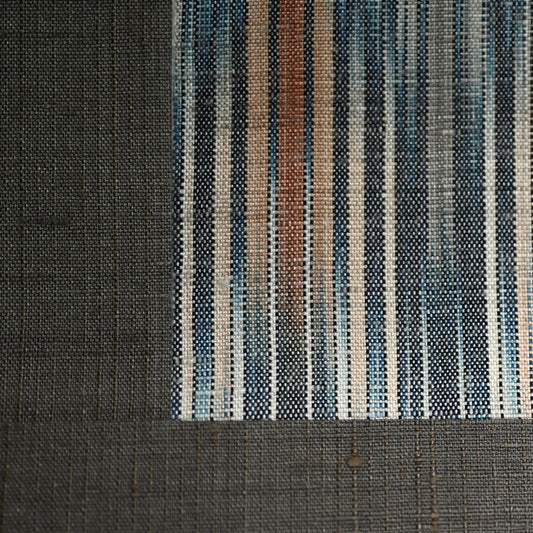
Collection: Textiles
Over 1500 years Japan developed a rich vocabulary of decorative textiles shaped by ritual practice, regional craftsmanship, and an evolving dialogue of dyeing and weaving techniques. From the finest courtesan robes to the humble indigo-dyed garments of farmers, textiles have long been vessels of cultural and class identity.
In sacred contexts, gilded silk-threaded banners, brocaded robes, and temple finery; their refined patterns connect ritual practice with centuries of courtly craftsmanship, often preserved for generations within temple treasuries.
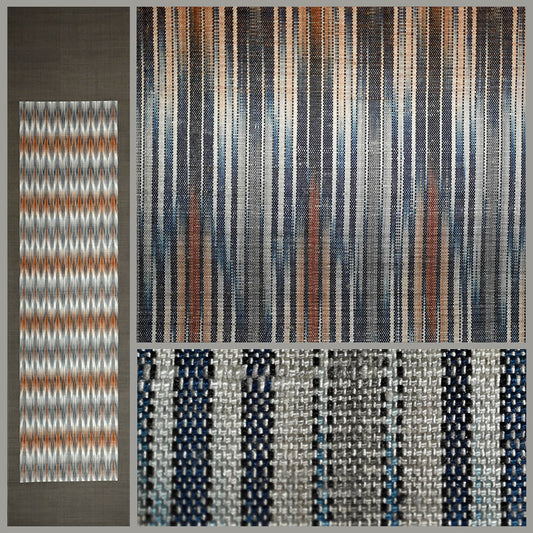
Alongside these ceremonial works, Japan developed a rich vocabulary of decorative textiles in Kimono. Techniques such as yūzen painting, katazome stencil dyeing, and rinzu figured silk allowed artisans to create garments and furnishings with vibrant color, elegant pattern, and narrative design. Weaving styles developed in close dialogue with local environment and materials. Tsumugi from the northeast, Oshima from Amami, and bold kasuri (ikat) patterns all reflect regional identities.
Balancing this refined world is mingei, the “people’s craft,” where beauty emerges from everyday life. Indigo-dyed work clothing, patched boro, a tightly woven sakiori rag textiles, and the deep blues of aizome (indigo dye), reveal an unselfconscious aesthetic rooted in texture, thrift, and the quiet dignity of use, celebrating the quiet artistry of anonymous makers.

-
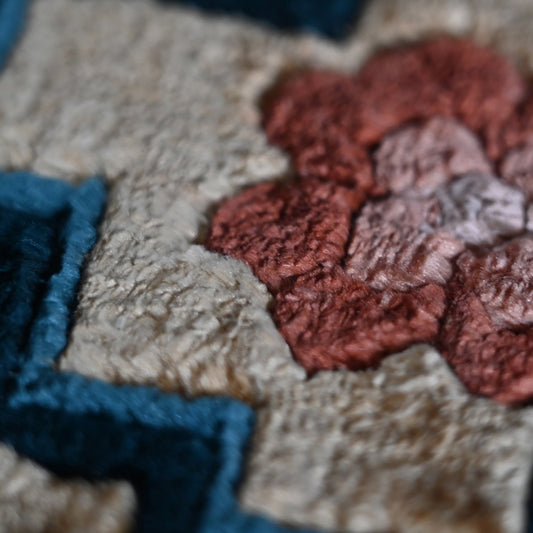
Exquisite Hand Made Antique Japanese Nabeshima Carpet
Regular price ¥189,600 JPYRegular price -

 Sold out
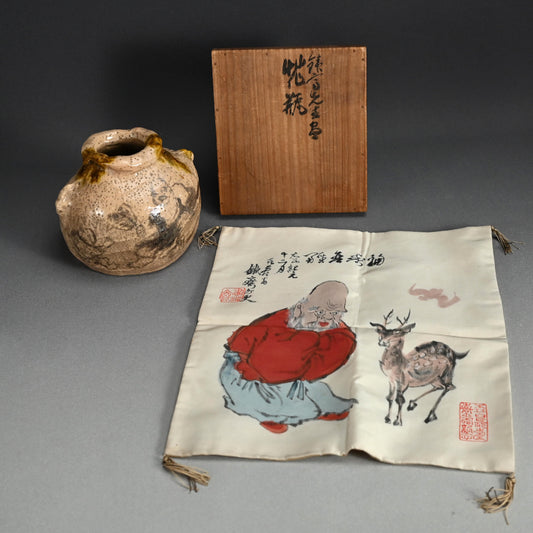
Vase and Fukusa ー富岡鉄斎 “鉄斎先生壺 花瓶”
Vendor:Tomioka TessaiSold out -
Textile Scroll by Living National Treasure ー土屋 順紀 “秋声”
Vendor:Tsuchiya YoshinoriSold out