Collection: Nagano Tetsushi 長野 垤志
Nagano Tetsushi (1900-1977) was born in Aichi Prefecture and initially aspired to become a painter, moving to Tokyo in 1917. Following the Great Kantō Earthquake, however, he turned his focus to the crafts and began studying metal casting under the metal artist Yamamoto Azumi. In 1928, he joined the Nanokakai (Seven-Day Society) led by Katori Hidemasa, and in 1931 he received instruction in the production of tea ceremony kettles (chanoyu-gama) from the Nagoya-based kettle maker Itō Kazumasa. In 1933, he was awarded a Special Prize at the National Teiten Imperial Art Exhibition. In 1963, he was designated a Living National Treasure for his mastery of tea kettle production techniques. He conducted extensive research into classical and celebrated forms such as Ashiya kettles and Tenmyō kettles, producing refined reproductions based on these historical models. At the same time, he developed innovative designs by reinterpreting traditional forms through a modern sensibility. His achievement in successfully reviving the technically demanding Wazuku kettle—long considered extremely difficult to produce—was especially highly acclaimed. In addition to tea kettles, Nagano also created distinguished cast works such as flower vases and jars in bronze and silver. Work by him is held in the National Museum of Modern Art in Kyoto as well as the National Crafts Museum, part of the National Museum of Modern Art in Tokyo among many others.

-
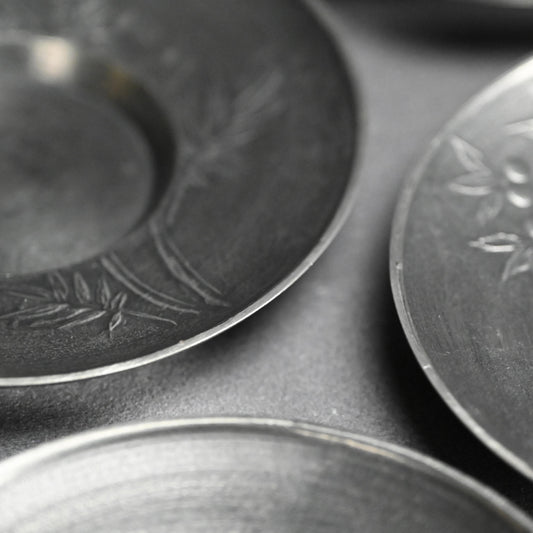
LNT Chataku Suzu (Metal) Tea Cup Coasters ー長野 垤志 “花文 錫茶托”
Vendor:Nagano TetsushiSold out