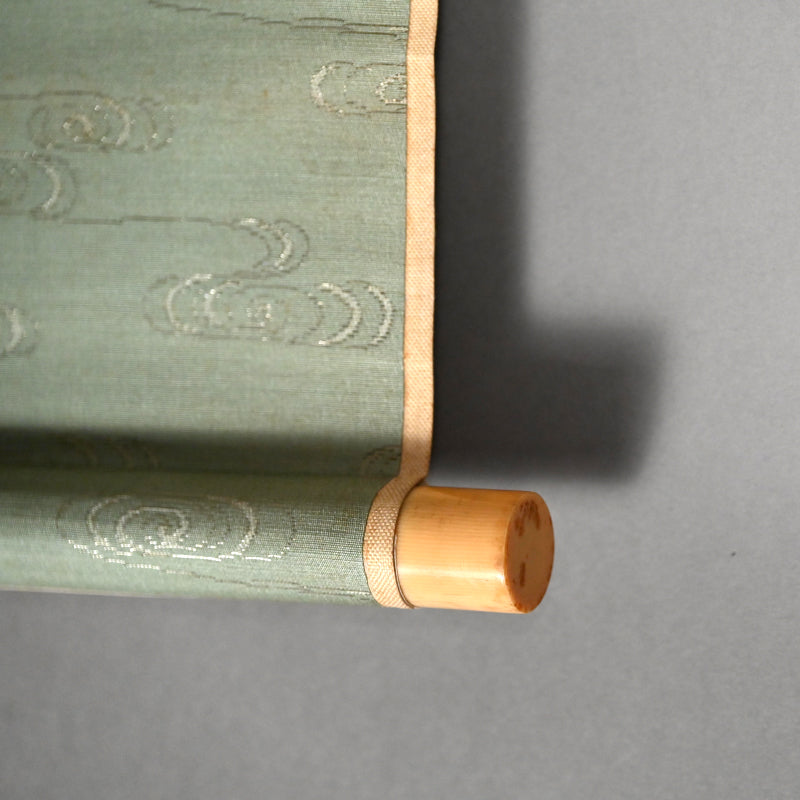
Taisho period Mystical landscape by Shirakura Niho; rendered in a soft, atmospheric palette, this painting depicts a solitary hillside retreat nestled among pines and weathered stone. At the center of the composition sits a humble scholar’s hut, its sliding screens partially opened to reveal a single figure resting at the window—an understated symbol of cultivated leisure and the Daoist ideal of freedom from worldly obligations. The architecture is lightly suggested rather than fully delineated, allowing the forms to dissolve gently into the surrounding landscape. A pine tree, its trunk twisting like calligraphy, shelters the hut with graceful, arching boughs. Below, a waterfall cascades down jagged rocks rendered through layered strokes and modulated tones that recall Chinese literati landscape conventions. The brushwork throughout is lively yet restrained: forms are built through pattern-like dabs, veiled washes, and quick dry strokes, giving the work a dreamlike, meditative quality. Nihō’s approach reflects both his grounding in Japanese bunjinga painting and the quieter sensibilities of Taisho-era aesthetics, in which nostalgia, poetic introspection, and personal retreat were recurrent themes. Rather than striving for realistic depiction, the painting evokes the feeling of a cherished refuge. Pigment on silk in a cloud patterned cloth border with faux ivory rollers, it is 46.5 x 96.5 cm (18-1/2 x 38 inches) and is in overall excellent condition.
Shirakura Kinichiro (Niho or Jiho, Kanyu, 1896-1974) was born in Niigata, and initially was inducted into Nanga under Hatta Goro. Moving to Tokyo he began studies of Western oil painting following Ishii Hakutei. However, that was unfulfilling, and he soon moved to Kyoto, returning to the Nanga style under Tanabe Chikuson (also Tajika/Tachika Chikuson, 1864-1922). Following the death of Chikuson, he moved to Tokyo where he took up residence in the studio of Komura Suiun. He was consistently displayed at both the Teiten-Nitten National Exhibitions as well as the Nihon Nanga –In Ten. Like other individualistic artists of his generation, he was known for his very unique and easily discernible style and enjoyed immense popularity. He later changed his name to Kanyu. He was recognized in an English book published in 1958 as one of the most important artists to visit when in Japan.